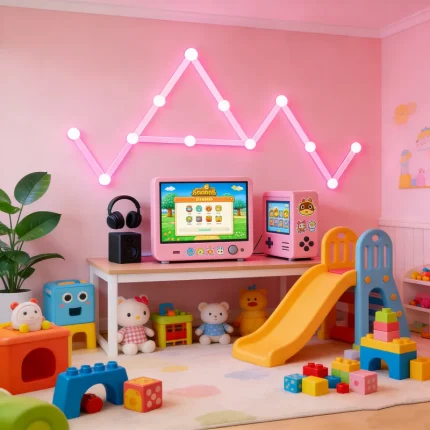
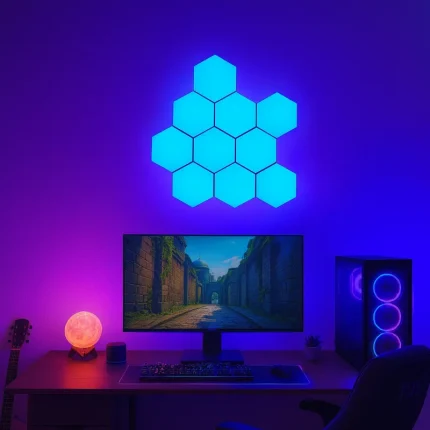
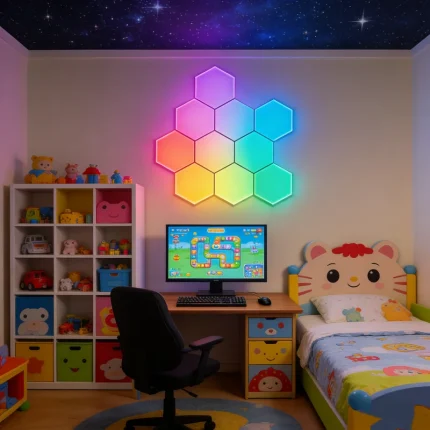
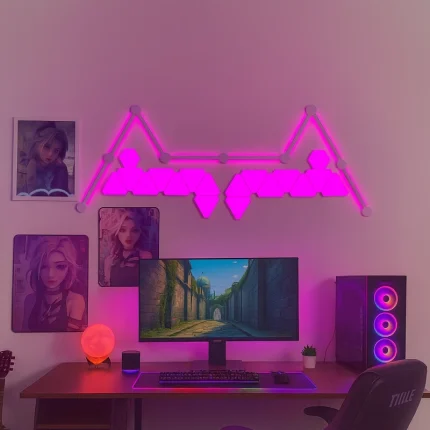
In 2026, RGB lighting is no longer just a decorative trend—it is a technology-driven design language shaping gaming rooms, streaming setups, and modern home interiors worldwide. From the pixels on your screen to modular LED panels on your wall, RGB lighting has evolved into a sophisticated system that blends science, aesthetics, and user experience.
Whether you are a gamer in the United States, a content creator in the United Kingdom, or a home design enthusiast in Germany, France, Australia, or Canada, understanding how RGB LED technology works helps you make smarter choices and unlock the full potential of modern lighting systems.
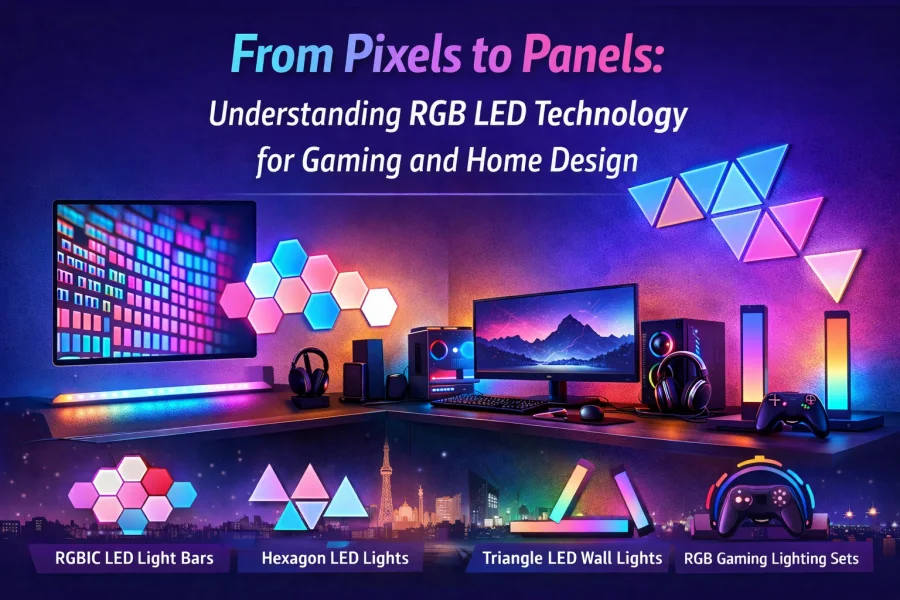
This article breaks down RGB LED technology from the ground up—explaining how colors are created, how RGBIC works, and why hexagon LED lights, triangle LED wall lights, RGBIC LED light bars, and RGB gaming lighting sets have become the backbone of immersive room design.
From Digital Pixels to Physical Light
Every modern display—monitors, TVs, smartphones—relies on RGB pixels. Each pixel combines red, green, and blue light at different intensities to create millions of colors. RGB LED lighting brings this same principle off the screen and into physical space.
Instead of flat pixels, RGB lighting uses LED diodes arranged in panels, bars, or strips. When these LEDs are controlled precisely, walls, ceilings, and furniture become dynamic visual surfaces rather than static backgrounds.
This transition—from pixels to panels—is what makes modern RGB lighting so powerful for gaming and home design.
How RGB LED Technology Works
At its core, RGB LED lighting is based on additive color mixing:
By adjusting brightness and intensity, LEDs can produce thousands of shades and tones. Unlike traditional lighting, RGB LEDs allow users to control color, brightness, saturation, and transitions in real time.
This level of control is what makes RGB lighting ideal for:
Gaming immersion
Streaming backgrounds
Mood-based home lighting
Modern interior accents
RGB vs RGBIC: The Key Technological Leap
One of the most important advancements in recent years is RGBIC technology.
Traditional RGB Lighting
Entire light shows one color at a time
Limited gradient and animation effects
Best for basic ambient lighting
RGBIC Lighting
Each LED (or LED segment) is individually controlled
Multiple colors can appear on a single panel or bar simultaneously
Smooth gradients, flowing effects, and dynamic motion
RGBIC is the reason modern hexagon LED lights and RGBIC LED light bars feel “alive” rather than static. This technology dominates high-end gaming rooms and streaming setups across North America and Europe.
Why Shape Matters in RGB Lighting Design
Not all RGB lights are created equal. Shape plays a major role in how light interacts with space.
Hexagon LED Lights: Modular Symmetry
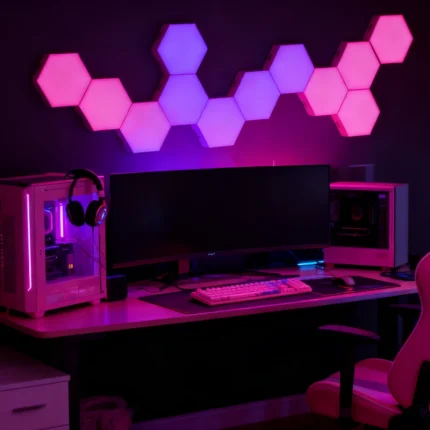
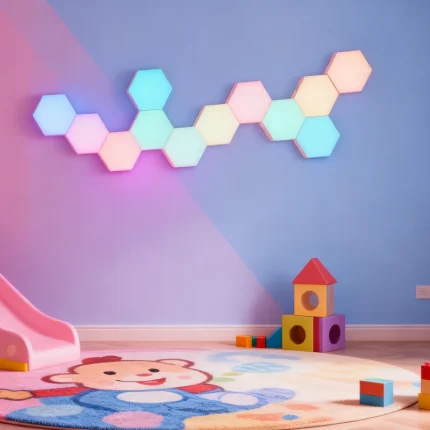
Hexagon LED lights are built for scalability and balance. Their six-sided geometry allows seamless expansion without breaking visual flow.
Why hexagons work:
Common uses:
Gaming wall behind monitors
Feature wall in living rooms
Modular RGB gaming lighting sets
Hexagon panels are often the foundation of modern RGB layouts.
Triangle LED Wall Lights: Direction and Motion
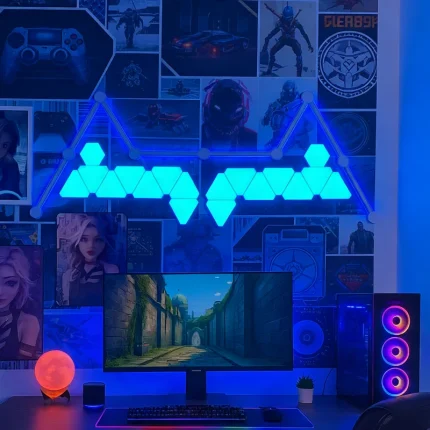
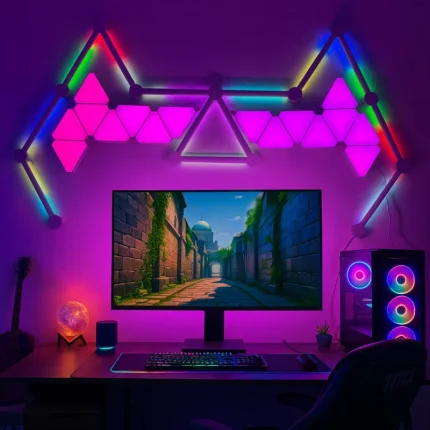
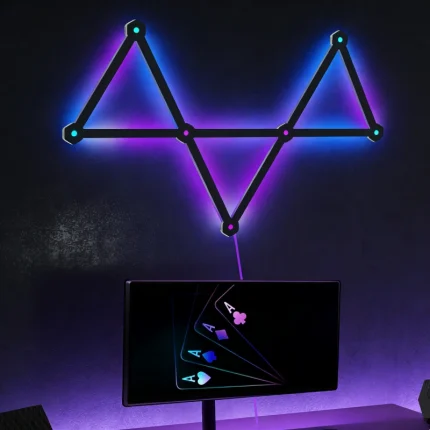
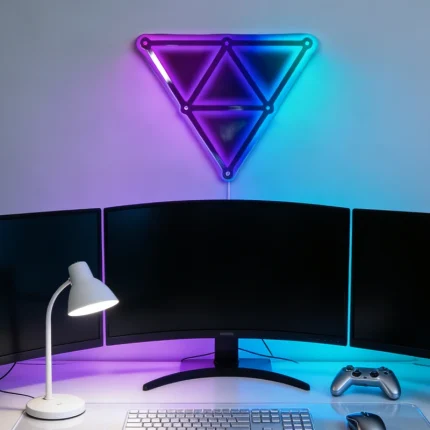
Triangle LED wall lights introduce energy and movement. Their angular design naturally guides the eye, creating visual momentum across walls.
Why triangles stand out:
Common uses:
Triangles pair especially well with hexagon LED lights by adding contrast and depth.
RGBIC LED Light Bars: Structure and Flow
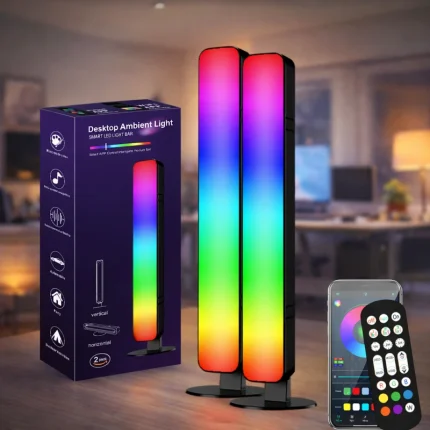
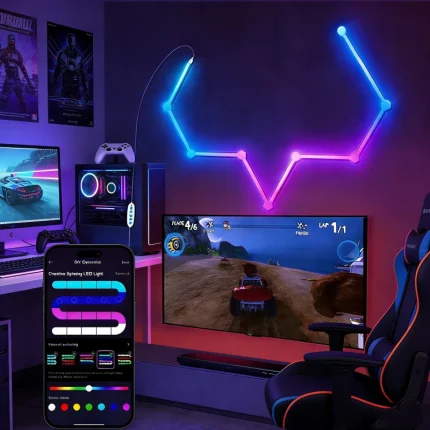
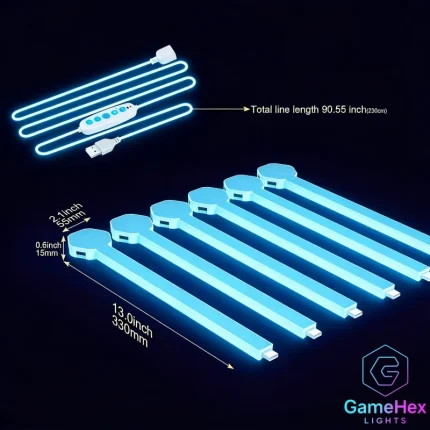
RGBIC LED light bars act as connectors within a lighting ecosystem. While panels grab attention, light bars define edges, lines, and boundaries.
Why light bars matter:
Frame desks, shelves, and walls
Add indirect ambient lighting
Create visual continuity
Common uses:
In well-designed setups, light bars quietly unify the entire space.
RGB Gaming Lighting Sets: Why Systems Matter
Many users start with individual lights, but RGB gaming lighting sets offer a system-based approach.
Benefits of lighting sets:
Unified control via one app
Color synchronization across devices
Easier installation and expansion
For beginners and advanced users alike, complete RGB gaming lighting sets reduce complexity while maximizing visual impact.
The Science of Color Perception in Rooms
RGB lighting isn’t just about brightness—it’s about how humans perceive space.
Warm vs Cool Colors
Warm tones (reds, oranges): energizing, dramatic
Cool tones (blues, purples): calming, immersive
Brightness Layering
Motion and Flow
Understanding these principles helps you design rooms that feel immersive without overwhelming the senses.
RGB Lighting for Gaming Rooms
Gaming environments benefit the most from RGB LED technology.
Effective gaming setups often include:
Hexagon LED lights as a focal point
Triangle LED wall lights for motion
RGBIC LED light bars for edge lighting
Together, they create immersion that responds to gameplay, sound, and mood—especially popular among gamers in the US, Canada, Germany, and Australia.
Read More:RGBIC vs RGB Wall Lights: What’s the Real Difference for Immersive Setups?
RGB Lighting for Streaming and Content Creation
For streamers, lighting is part of branding.
Key goals:
Triangle panels frame faces and logos, hexagon panels add visual identity, and RGBIC light bars soften shadows. This layered approach is now standard among professional creators in the UK, France, Italy, and Spain.
RGB Lighting in Modern Home Design
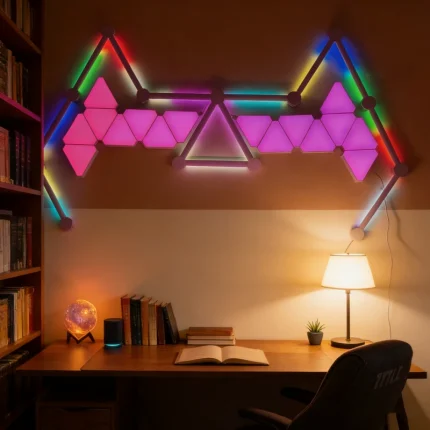
Beyond gaming, RGB LED lighting is reshaping home interiors.
Popular applications:
When used subtly, RGB lighting adds sophistication rather than distraction—especially when hidden strips and soft gradients are involved.
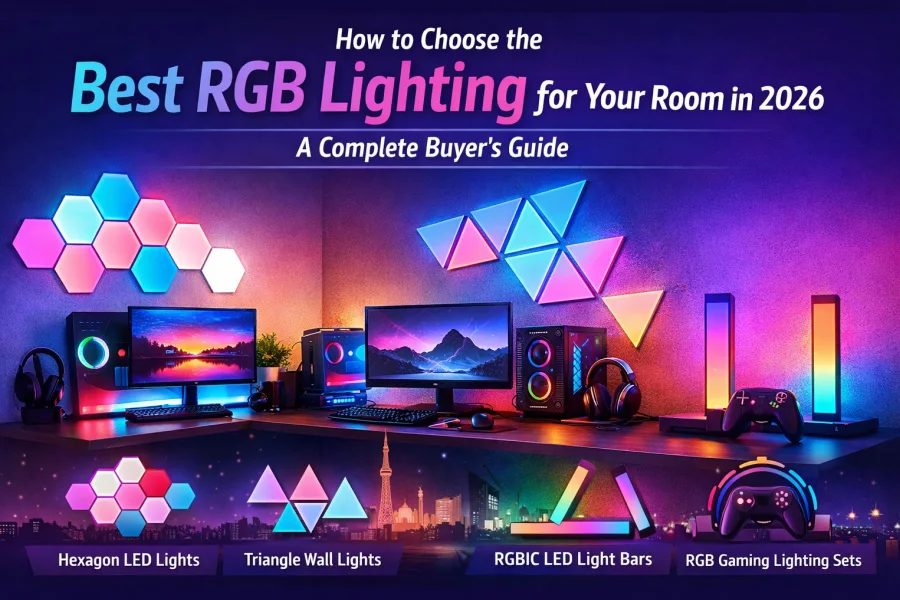
Learn More:How to Choose the Best RGB Lighting for Your Room in 2026: A Complete Buyer’s Guide
Why RGB Lighting Is a Long-Term Investment
Modern RGB systems are designed to grow with you.
Advantages:
Modular expansion
Software updates
Multi-room compatibility
Instead of replacing fixtures, users add panels, bars, or strips as needs evolve. This modular philosophy appeals strongly to homeowners and renters alike.
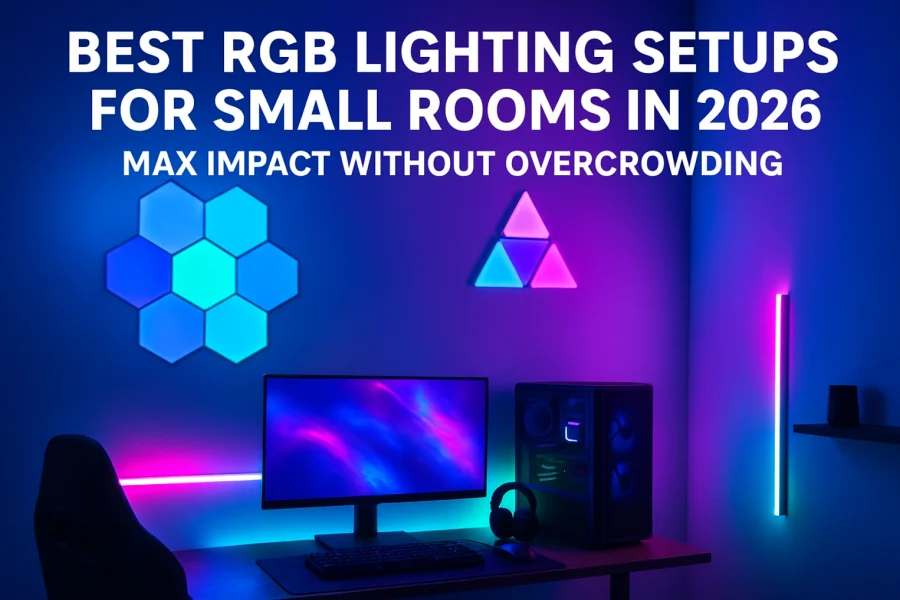
Learn More:Best RGB Lighting Setups for Small Rooms in 2026: Big Visual Impact Without Clutter
Global Design Trends in 2026
Across the US, Canada, Europe, Australia, New Zealand, Brazil, and Argentina, RGB lighting trends are converging:
Modular designs over fixed fixtures
Smart control over manual switches
Personalization over uniform lighting
Hexagon LED lights, triangle LED wall lights, RGBIC LED light bars, and RGB gaming lighting sets are now global design staples rather than niche products.
Final Thoughts: Understanding Creates Better Design
RGB lighting is no longer just about color—it’s about technology, perception, and experience.
By understanding how RGB LED systems work—from pixels to panels—you gain the ability to design spaces that are immersive, flexible, and visually powerful.
Whether you are building a gaming room, upgrading a streaming setup, or redefining modern home decor, informed choices lead to better results—and lighting that truly transforms your space.